What it is
Storylines is a Guardian module for topic pages. A model reads the latest 200 pieces on a topic and picks the three strongest Storylines: chains of connected events, each with five key stories and a few supporting pieces such as explainers, opinion and video. It selects and orders the journalism, and writes nothing but a short title.
This project tests an idea: that this kind of structured, editorially grounded selection is a good foundation for much richer formats. The outputs can be as ambitious in form as they like. In substance they must stay entirely faithful to the Guardian’s journalism. If anything in an output can’t be traced back to a Guardian article, the experiment has failed.
How the outputs are made
Claude, an AI model, fetches the full text of each article in a Storyline through the Guardian’s Content API. It then writes the output using those articles and nothing else: no web searches, and none of its own knowledge.
Every sentence is tied to the passage in the article that supports it. A build script checks each quote and figure against the article text, and refuses to build the page if one doesn’t match. Each output comes with a provenance manifest, listing every piece of text, its source and the supporting passage, followed by a note of anything uncertain or left out.
The videos work the same way. Each is written as a web page in which every frame is a function of time, reads its words only from the checked list, and is rendered frame by frame to a 1080p MP4. Their pages carry a transcript of everything on screen and everything said, each line linked to its article. The narration is a synthetic voice, generated offline, and follows the same sourcing rules as the text on screen.
None of the outputs has yet been checked by a Guardian editor.
Outputs so far
Grouped by topic page. Each topic’s Storylines were generated on the date shown.
Trump administration Storylines of 26 September 2026
Explainers
A five-minute read for someone new to the story, with an interactive diagram.
- White House bans CNN, MS Now and PoliticoExplainer, with a day-by-day grid of the nine days from the ban to Air Force One
- US-Iran war and Hormuz negotiationsExplainer, with Iran’s seven-day timetable as a step-through diagram
- ICE immigration enforcement crackdownExplainer, with the immigration system drawn stage by stage
Videos
Thirty seconds of motion graphics, from the first development to the latest, with narration, a score and sound effects.
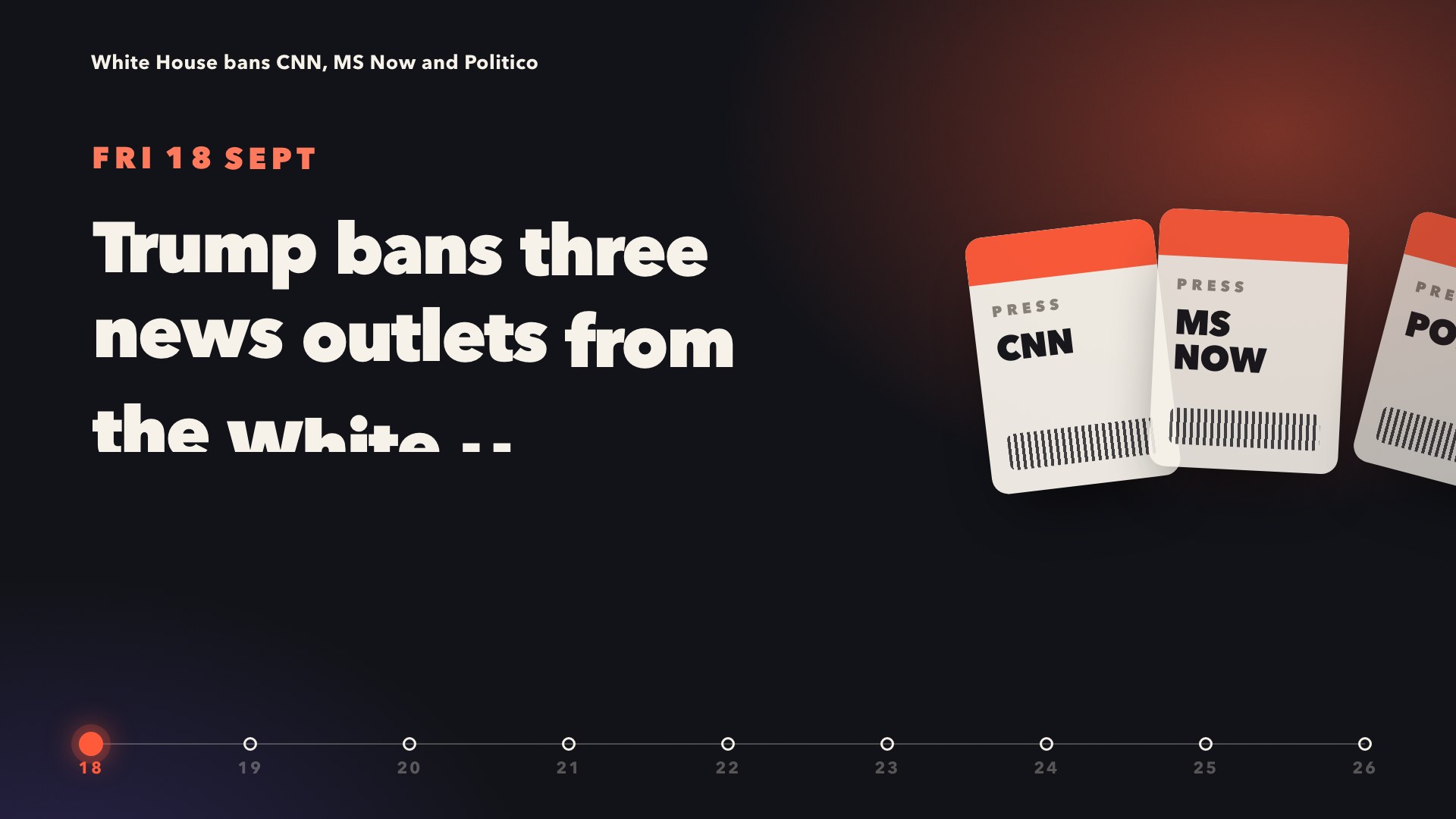 White House bans CNN, MS Now and PoliticoPress passes switched off and on, and the TV pool going dark
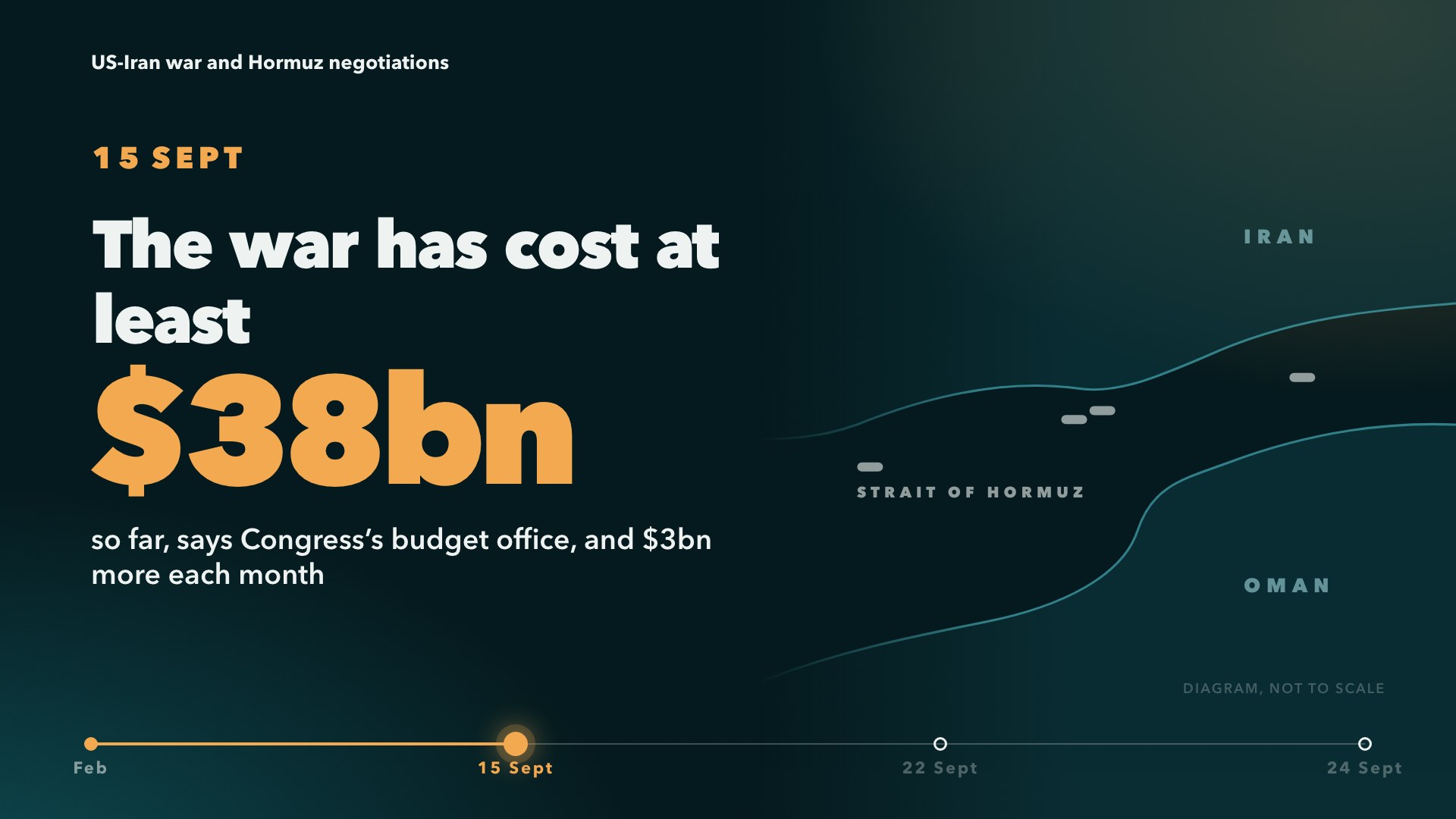 US-Iran war and Hormuz negotiationsShipping through the strait thins out, and Iran’s offer is built day by day
 ICE immigration enforcement crackdownThe Guardian’s reporting in date order, stage by stage
Manchester City Storylines of 28 September 2026
Videos
Thirty seconds of motion graphics, with narration, a score and sound effects.
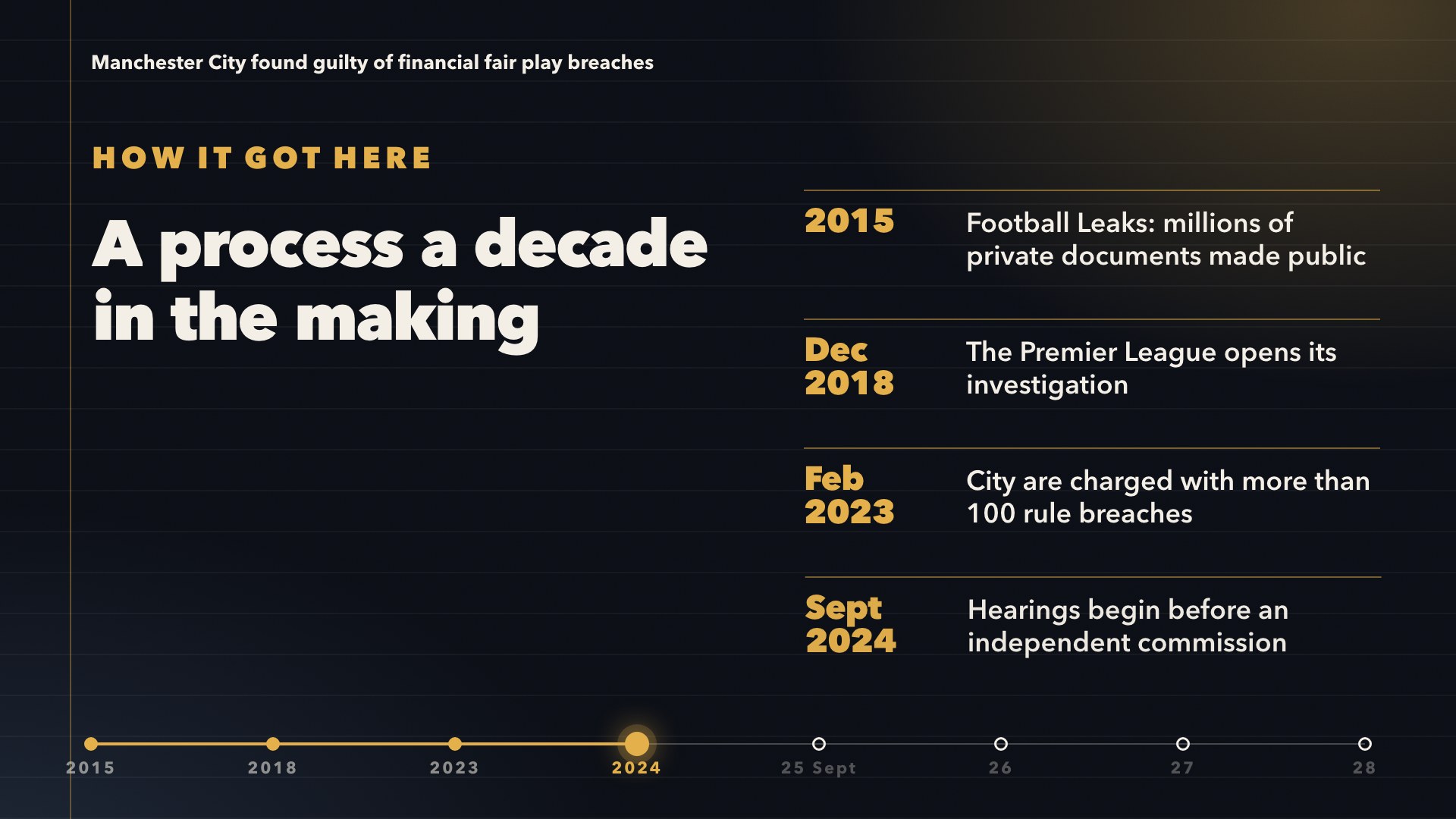 Manchester City found guilty of financial fair play breachesFrom Football Leaks to the verdict, the trophies of those seasons, and what was said next
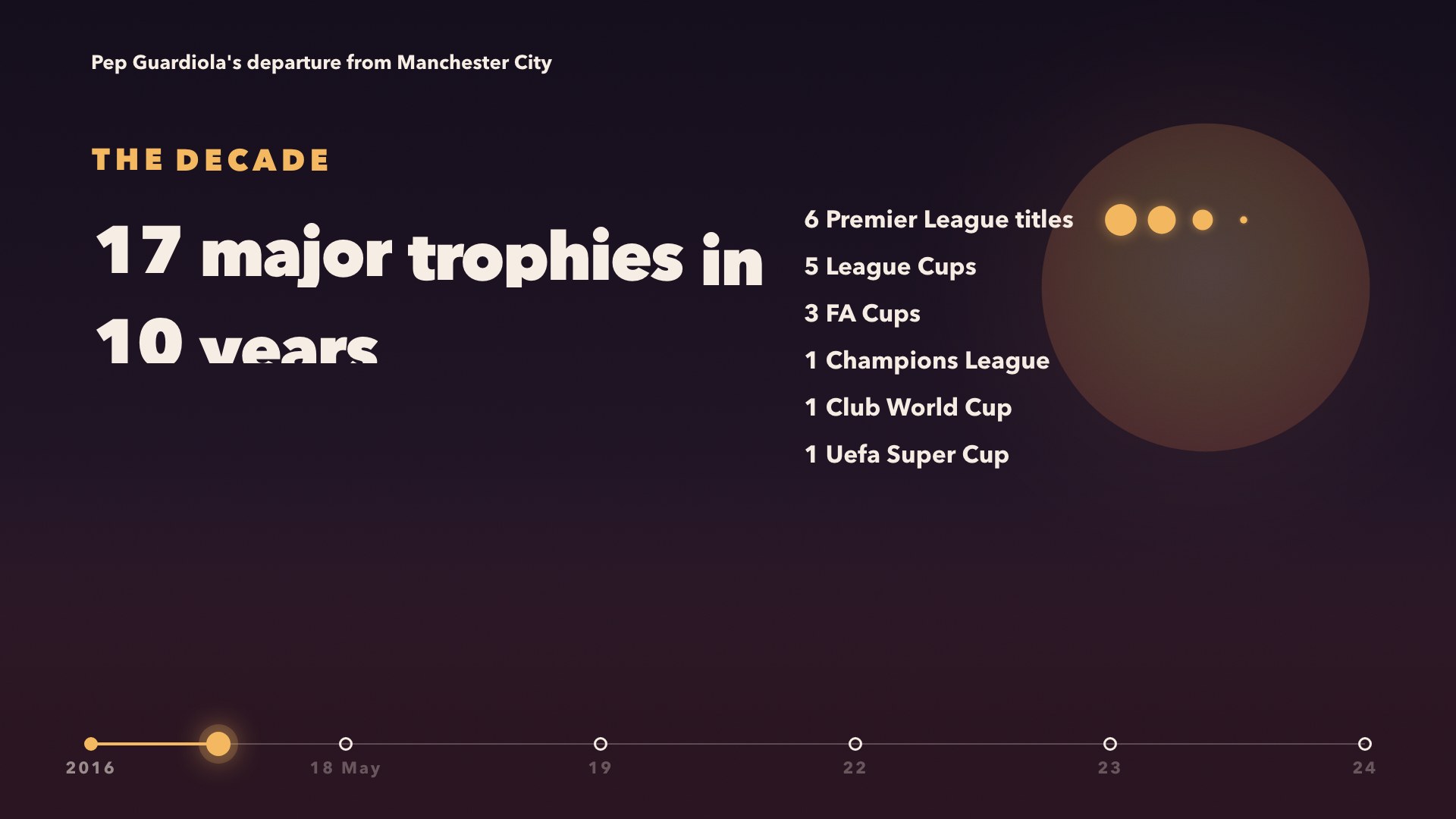 Pep Guardiola's departure from Manchester CityA decade of trophies, the week the news broke, and “Nothing is eternal”
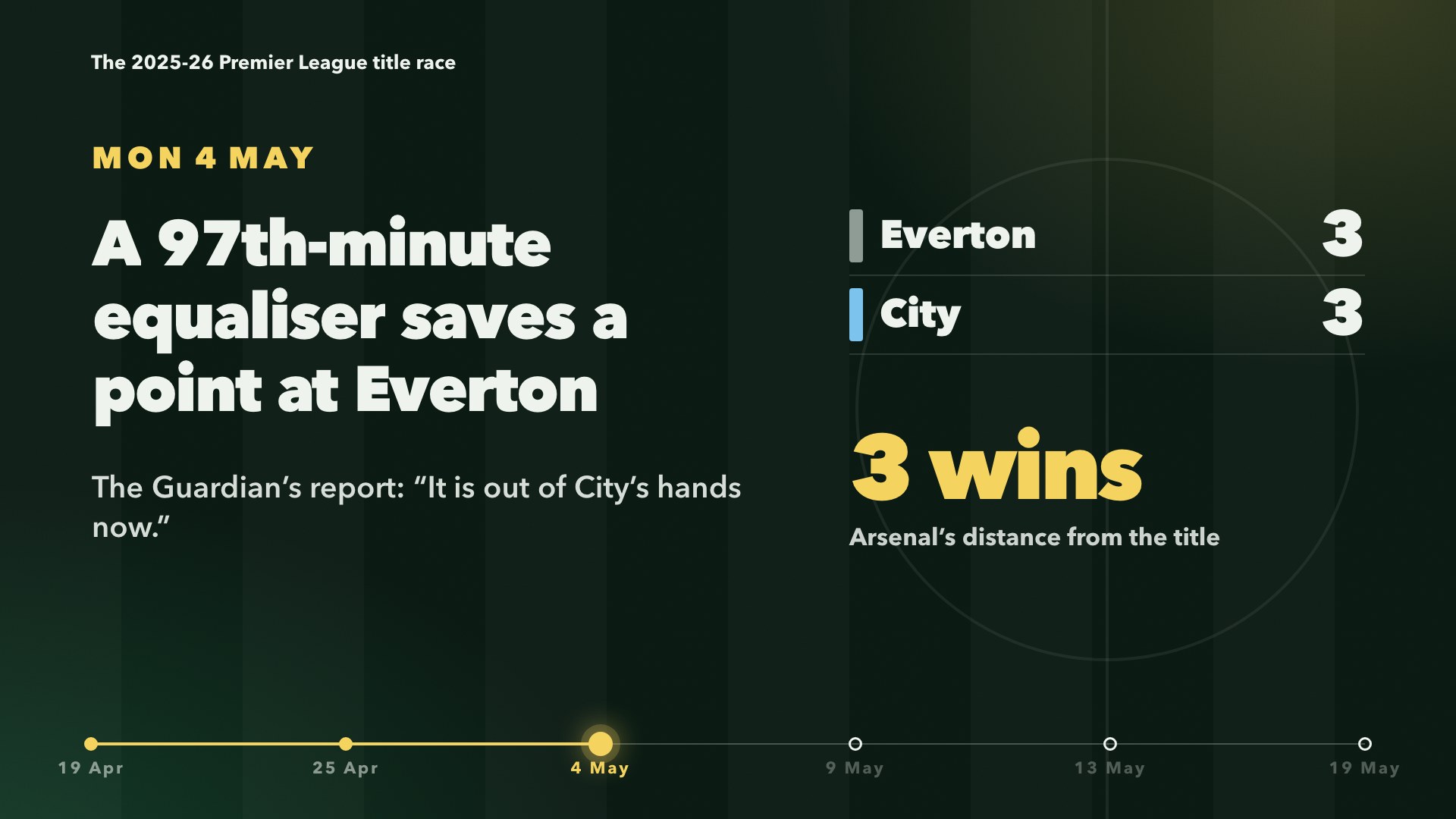 The 2025-26 Premier League title raceThe last month result by result, with the gap between Arsenal and City
Diary
-
Thirty seconds, with narration Milestone
The brief for the videos had changed: it now asks for more length and for narration where it helps, with a separate narration script. The Manchester City videos were first made to the old 15-second brief by mistake. All six videos are remade at 30 seconds. The extra time goes into letting each development land, not into more text: entrances keep their speed and the finished frame holds for longer, timed so every screen can be read.
The narration is a synthetic voice, run offline: “Emma” for the Trump set, “George” for Manchester City. It is sparse, two to four short lines a video, and it tries to add what the screen does not say rather than read it aloud. The closing quotes are left unnarrated. Every spoken line goes through the same checks as the words on screen, and each video’s page has captions and a narration script with sources.
Spoken lines turned out to need their own fact-check. Things that read fine on screen went wrong aloud: “he” and “it” with nothing to point back to, “hours later” heard as hours after the wrong event, “two” that could mean two people. The checker also caught a line that turned one of Iran’s several conditions into the only one. All were rewritten before the final render.
-
A second topic: Manchester City Milestone
Three more videos, from the Storylines for the Manchester City topic page: the guilty verdict on financial fair play breaches, Pep Guardiola’s departure, and the 2025-26 title race. Same brief and the same kit as the Trump set, which was the point: the method should carry across subjects without being rebuilt.
Football brings its own traps. The articles disagree on how many charges City faced (134, 115 and “more than 100”), so the video uses the figure they all support. The title race is told through each result and the gap between Arsenal and City exactly as the reports gave it, including who had played more games. And the tone changes with each story: a low, serious score for the verdict, a warm and slow one for Guardiola, match-night drums and a synthesised crowd for the title race.
The fact-check again earned its place. It caught City’s denial on screen for under a second, “Nothing is eternal” shown after the next day’s remarks, and Arteta’s complaint about one match placed next to the scoreboard of another. It also pointed out that a few supporting passages came from standfirsts rather than article text; the manifests now say so wherever that happens, across every output.
-
Sound for the videos
The videos went out silent, which was a mistake: motion graphics without sound feel unfinished. Each now has its own short score with sound effects cut to the picture. There is no voiceover. The screen already carries the words, and a narrator reading them, or different ones, in 15 seconds would get in the way.
The tone follows the story. The press ban gets a taut, rhythmic score, with stamps for the disabled badges and the TV pool powering down and back up. Iran gets a low drone and a sea-like wash; the strikes are muted pulses rather than explosions, because people died in them, and the video ends on an unresolved chord while Iran waits for an answer. The ICE video is sparse piano with no stingers at all.
Everything is synthesised in code, so there are no samples and nothing to license, and it can be re-cut when the animation changes. Each video page describes its soundtrack in words for anyone who can’t hear it.
-
Fifteen-second videos Milestone
The same three Storylines as motion graphics: 15 seconds each, 1080p, in each explainer’s colours so the two sets belong together. The brief was to make a showreel piece that still tells someone new to the story what happened, in what order, and why it matters.
Fifteen seconds forces choices. Each video keeps a date rail along the bottom so the order is never in doubt, lets a drawn object carry each story (press passes switched off and on; shipping in the strait thinning to a trickle; a strip of the four stages of the immigration system), and ends on a card crediting every article. Everything the explainers could hedge in a clause had to fit in a few words here, so each line went through the same source checks and a separate fact-check.
The animations are written as web pages and rendered frame by frame, so they can be re-rendered or changed without starting again. Each video’s page has a transcript of what is on screen, linked to the journalism, for anyone who can’t or would rather not watch.
-
Live on the web Milestone
The three explainers are now public, each with its provenance manifest as a web page linked from the footer. The full text of the fetched Guardian articles stays offline: publishing it would mean republishing the journalism, so the manifests quote only the short passages that support each sentence.
-
The first explainers Milestone
Three explainers, one for each Storyline on the Trump administration topic page, generated on 26 September. Each is a single page that works offline and on a phone, meant to take about five minutes to read.
The three Storylines have different shapes, so each page has its own diagram. The press ban is a tight chain of events over nine days, so it gets a day-by-day grid showing who did what and whether the outlets could get into the building. The Iran Storyline turns on an offer with a timetable, so the diagram is that timetable, set against the 60 days of the June agreement. The ICE Storyline is less a chain than a set of reports on different parts of one system, so it is organised by stage: arrest, detention, the courts and removal.
The words and the checking come from a shared kit. Each explainer’s text lives in a file that pairs every sentence with its supporting passage, and the build fails on any quote or figure it can’t find in the source.
The build checks that quotes and figures exist in the articles, but not whether a paraphrase says more than the article does. So a second pass had a separate fact-checker read each page against the full articles. They found no wrong figures, but several dozen places where the wording went further than the reporting: a hedge dropped (“reportedly mistook him” became “a mistaken arrest”), a quote trimmed so that it changed meaning, an analyst’s judgment stated as fact, and one detail from outside the sources entirely (Benjamin Netanyahu described as Israel’s prime minister, which none of the articles says). All were fixed.
Two ICE articles, on the Austin shooting and on miscarriages in detention, could not be fetched at our Content API access level. That explainer uses only their headlines and standfirsts, and says so in its manifest.